MVP · Apr 2026 – present · Founder / Lead Engineer
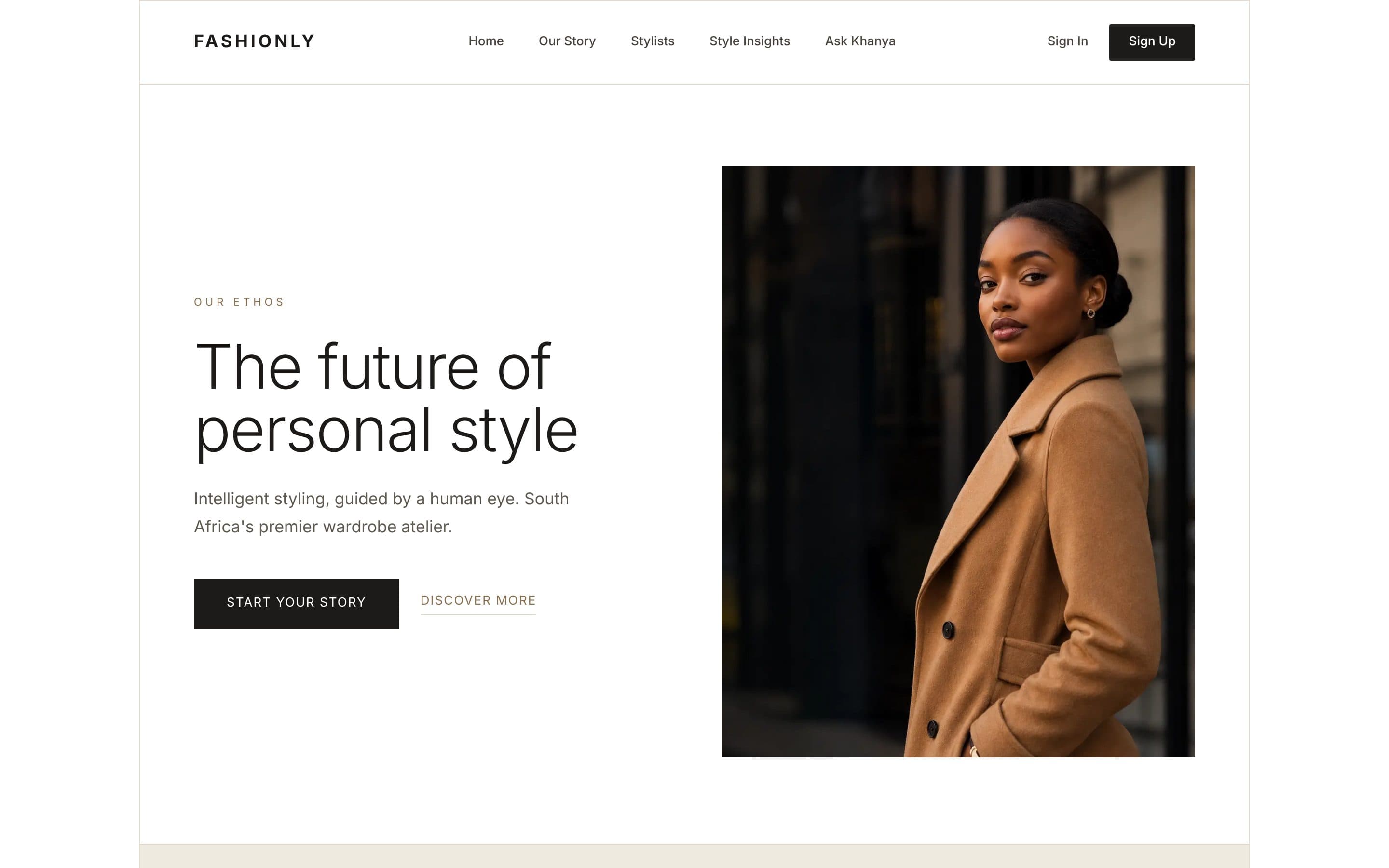
Your style, elevated: an AI stylist that starts with what you own
Overview
A full-stack fashion platform across Next.js web and Kotlin Android apps. Outfits are built from the user's own wardrobe, and products are recommended only where there's a genuine gap.
The problem
Fashion-commerce recommendations usually optimise for another purchase without understanding what the customer already owns.
The solution
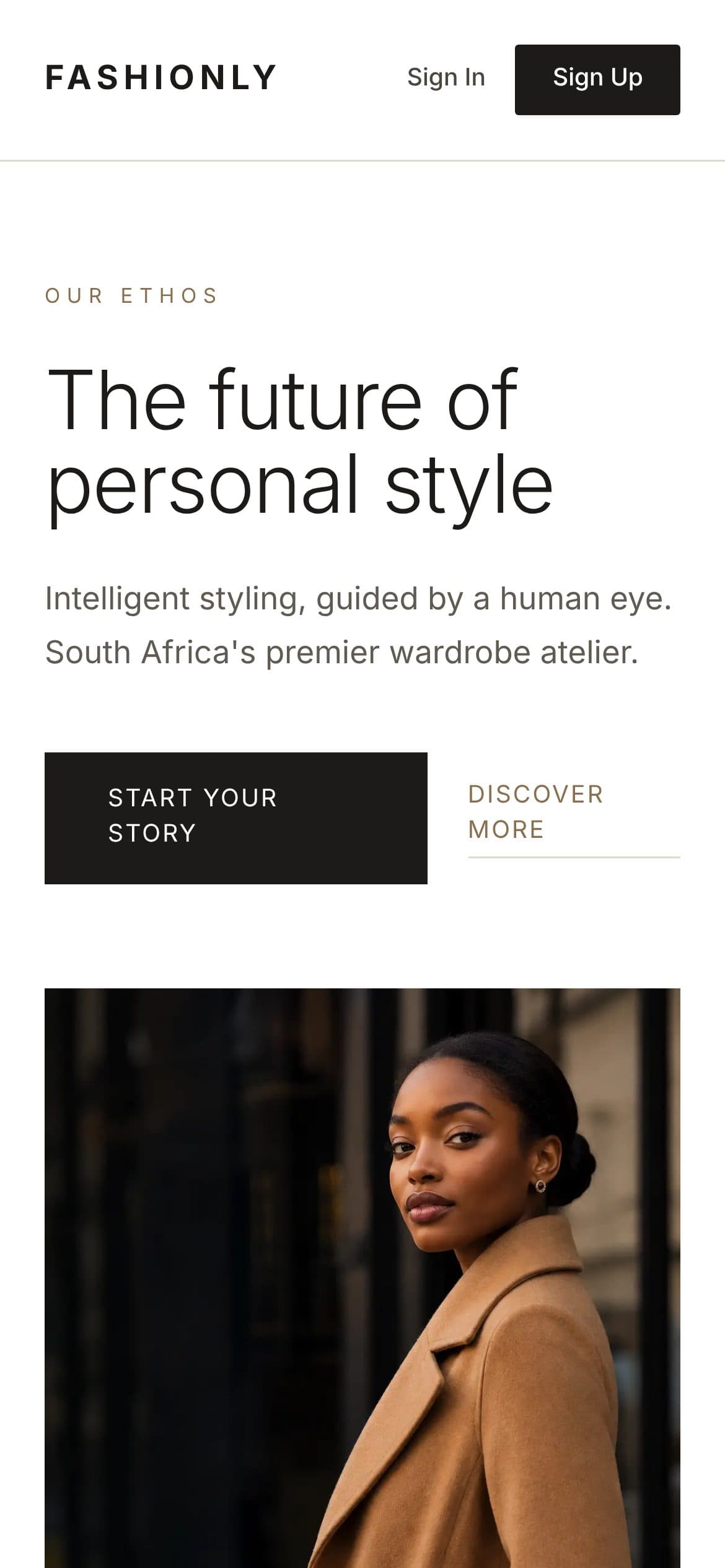
Fashionly grounds recommendations in the user's wardrobe, builds outfits from existing items and recommends products only where a genuine wardrobe gap exists. Khanya, a LangGraph stylist with about 15 typed tools, handles wardrobe access, catalogue search, saved looks and human-stylist bookings.
What I built
- Khanya: a LangGraph tool-calling stylist with about 15 typed tools
- MongoDB-checkpointed conversation memory and SSE streaming of tool progress and grounded product cards
- Request-scoped Supabase clients with row-level security on every request
Solved ahead of time
Designed in, not bolted on.
Every request scoped to one user
Request-scoped Supabase clients enforce RLS, restricting every request to the current user's data.
Conversations survive
MongoDB checkpoints preserve each conversation.
Infrastructure
The choices. And why.
- Supabase with RLS
- Per-user data isolation on every request.
- MongoDB checkpoints
- Durable conversation memory for the stylist.
- SSE
- Streams tool progress and product cards live.
What success looks like
A working end-to-end MVP across web and Android: wardrobe management, catalogue discovery, conversational styling, saved looks and human-stylist booking.
Ask the twin