Live · Feb 2026 – present · Founder / Lead Engineer
South African legal research, e-discovery and learning, powered by AI
Overview
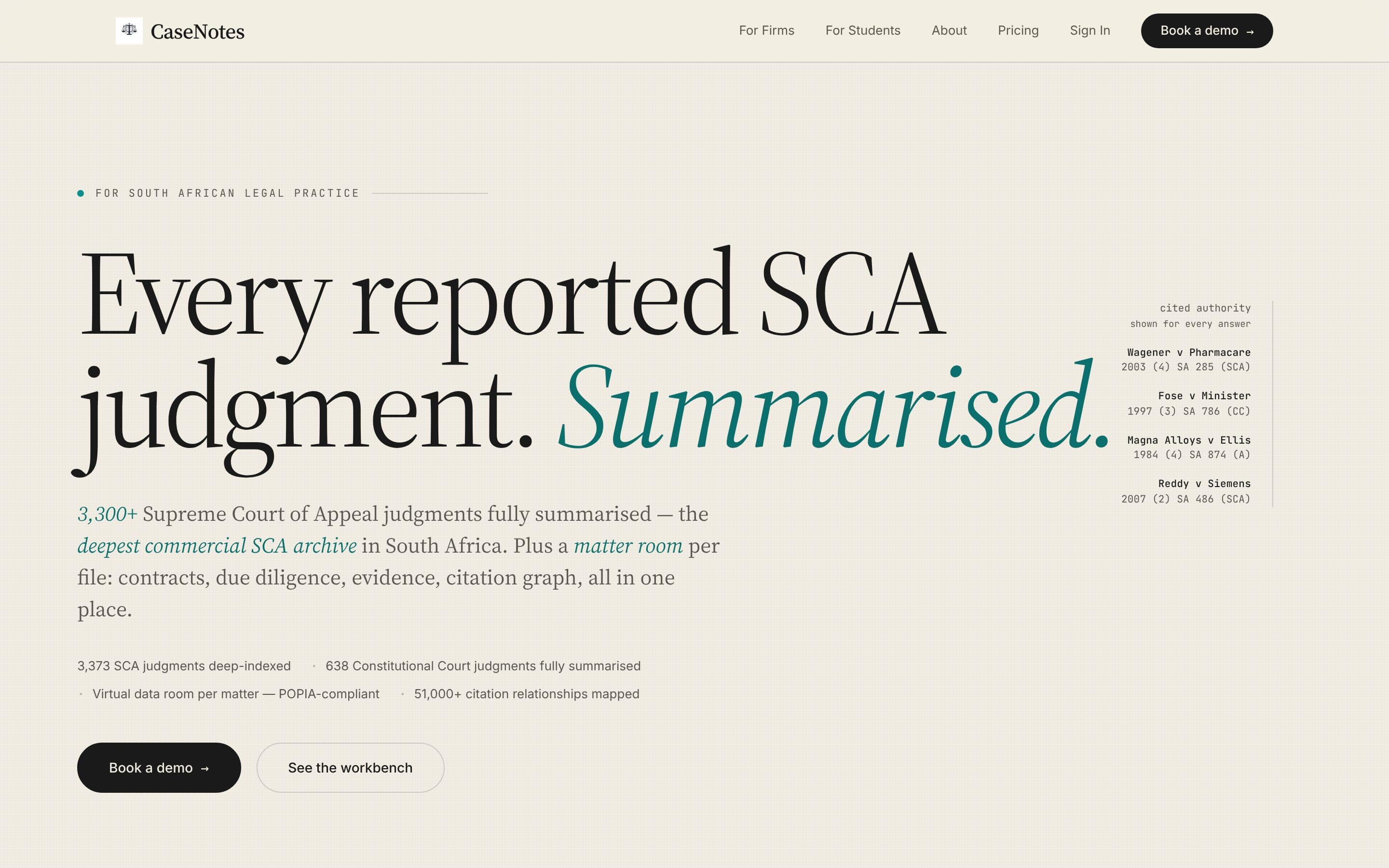
Hybrid semantic search across 10,000+ South African judgments, a precedent citation graph, structured document extraction, AI-assisted discovery and a learning bank of 1,624 rubric-scored questions.
The problem
South African legal information is scattered across portals with limited keyword search, while international e-discovery platforms are often priced beyond the local market.
The solution
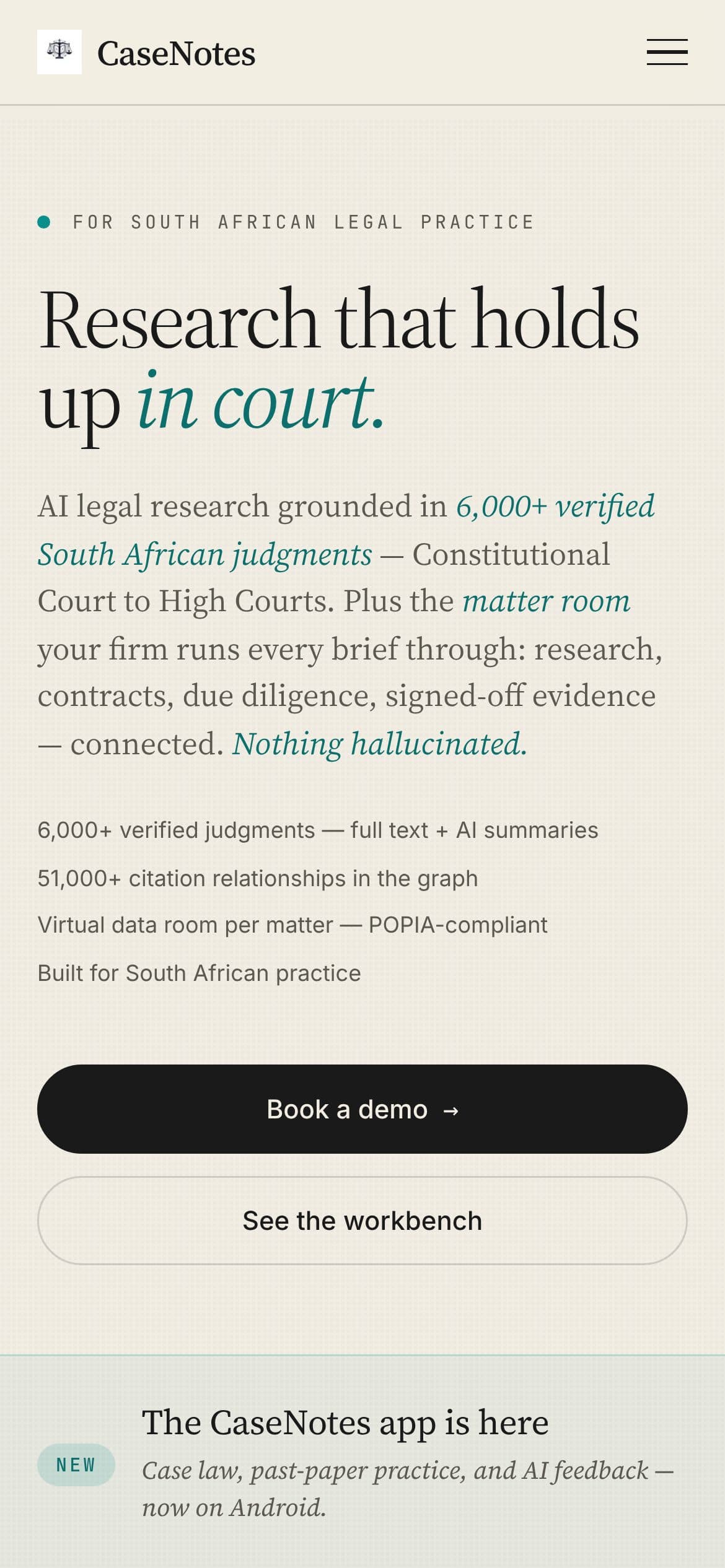
An integrated research, e-discovery and learning platform: hybrid semantic search across more than 10,000 judgments, a precedent citation graph, structured document extraction, AI-assisted discovery and stateful research workflows.
What I built
- Five-stage Graph RAG pipeline in LangGraph
- Hybrid pgvector and Neo4j retrieval, and a TAR active-learning loop
- Human-in-the-loop tool-calling chat with PostgreSQL checkpoints
- MCP server for case search and drafting
Solved ahead of time
Designed in, not bolted on.
Traceable sources
Retrieval results and citations stay traceable, so every answer can be checked against the judgment it came from.
Resumable jobs
Long-running work runs on Redis-backed workers and can resume rather than restart.
Human review
Chat and discovery keep a human in the loop, with conversation state checkpointed in PostgreSQL.
Infrastructure
The choices. And why.
- pgvector + Neo4j
- Hybrid retrieval: semantic similarity from pgvector, precedent relationships from the citation graph.
- Redis / ARQ workers
- Background and resumable jobs.
- LangGraph with PostgreSQL checkpoints
- Stateful, human-in-the-loop research workflows.
What success looks like
An integrated research and review platform grounded in more than 10,000 judgments, with a structured learning bank of 1,624 rubric-scored questions. The architecture supports resumable jobs, traceable sources and human review.
Ask the twin